Building your dream home means creating a space that’s uniquely yours, from the layout and finishes to the features that matter most to your family.
Before building begins, it’s important to understand how you’ll finance the project. Unlike a standard home loan, a construction loan is specifically designed for building a new home or undertaking major structural renovations. Rather than receiving the full loan amount upfront, funds are released in stages as key building milestones are completed, helping you manage cash flow and costs throughout the build.
Whether you’re self-employed, running a small business, working as a contractor or employed full-time, understanding how construction loans work can help you plan your project with confidence.
How Does a Construction Loan Work?
A construction loan is structured around the different stages of your building project.
Rather than receiving the full loan amount upfront, your lender releases funds in a series of progress payments. These payments are made as your builder completes key construction milestones and provides evidence that each stage has been finished.
During the construction period, borrowers typically only pay interest on the funds that have been drawn down, rather than the total approved loan amount.
Once construction is complete, the loan generally transitions to a standard home loan arrangement.
Typical Construction Loan Process
- Find a trusted broker… ask them if they’re accredited with Bluestone Home Loans.
- Apply for a construction loan and receive approval.
- Provide your building plans and fixed-price building contract.
- Construction begins.
- Progress payments are released at agreed stages.
- Building is completed and inspected.
- The loan moves to a standard home loan structure.
What Are the Main Stages of Construction Funding?
While every project is different, construction loans often follow five standard building stages.
- Slab or Base Stage
The foundation is prepared, concrete is poured and initial plumbing is installed. - Frame Stage
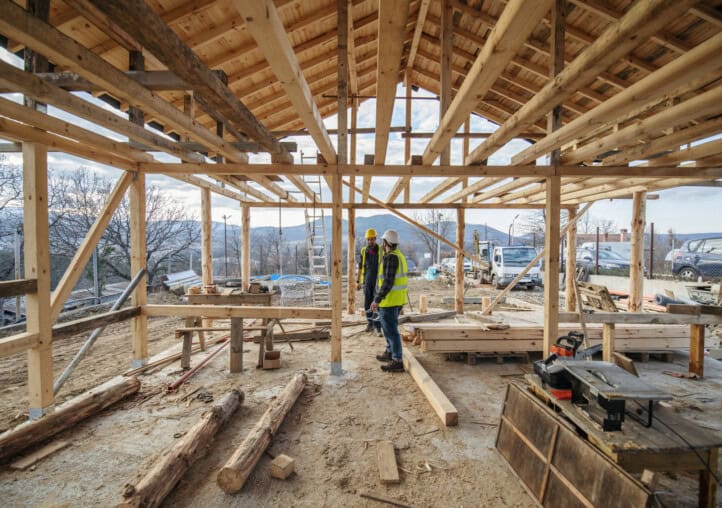
The structural framework of the home is completed, including walls, roofing trusses and load-bearing elements. - Lock-Up Stage
External walls, windows and doors are installed so the property can be secured. - Fit-Out Stage
Internal work such as plastering, cabinetry, electrical fittings, plumbing fixtures and painting is completed. - Completion Stage
Final inspections occur, finishing touches are completed and the property is prepared for handover.
Your lender may arrange inspections or require supporting documentation before releasing each progress payment.
What Do You Need to Apply for a Construction Loan?
To apply for a construction loan, you’ll generally need to provide information about your financial position, the property you’re building and the proposed construction project.
This may include:
- Proof of income
- Identification documents
- A fixed-price building contract
- Council-approved plans (where required)
- Building specifications
- Details of your builder
- Evidence of savings or equity contribution
Because every borrower’s situation is different and the requirements may differ depending on the lender, it’s worth speaking with a mortgage broker before you start building. A broker can help you understand which loan options may be suitable for your circumstances, explain the documentation you’ll need and guide you through the application process, helping you avoid delays once construction gets underway.
Construction Loans for Self-Employed Borrowers
Many Australians building a new home are self-employed, business owners, contractors or freelancers. While traditional lenders may rely heavily on standard income documentation, self-employed borrowers often have more complex financial circumstances, with income that can vary from year to year or be structured differently to PAYG employees.
That’s why choosing a lender that understands self-employed borrowers can make a difference. At Bluestone Home Loans, we recognise that no two borrowers are the same and take a flexible approach to assessing a range of income types and financial situations.
If you’re self-employed, the information required for your application will depend on your individual circumstances and the loan product you’re applying for. This may include documents such as:
- Recent tax returns
- Business financial statements
- BAS statements
- Supporting information from a registered accountant
- Business bank account records
Before you start building, it’s worth speaking with a mortgage broker about your options. A broker can help you understand which construction loan may be suitable for your circumstances, explain the documentation that may be required and provide guidance on your borrowing capacity before you commit to building plans or a construction contract.
What Are the Benefits of a Construction Loan?
Construction loans offer several advantages for borrowers planning a new build.
- You Only Pay on Funds Used
Because payments are released progressively, you’re generally only charged interest on each portion of the loan that has been drawn down during construction. - Cash Flow Management
Progress payments can help align funding with the construction timeline, reducing the need to access large amounts of money upfront. - Flexibility for New Builds
The loan structure is specifically designed to support residential construction projects and major renovations. - Build the Home You Want
Instead of compromising on an existing property, a construction loan allows you to create a home tailored to your family’s lifestyle and future needs.
Common Questions About Construction Loans
Is a construction loan different from a normal home loan?
Yes. A construction loan releases funds progressively as building stages are completed, rather than providing the full loan amount at settlement.
Can self-employed borrowers get a construction loan?
Many self-employed Australians successfully obtain construction finance each year with Bluestone Home Loans. Eligibility depends on factors such as income verification, financial position and lending criteria.
Do I need a builder before applying?
Most lenders will require details of a licensed builder and a fixed-price building contract before final approval and construction funding can commence.
Can I use a construction loan for major renovations?
In many cases, yes. Construction loans may be available for substantial structural renovations and extensions, depending on the project and our lending requirements.
Building Starts with the Right Finance
A construction loan can provide the funding structure needed to turn building plans into reality. Understanding how progress payments work, preparing your documentation early and selecting a lender that understands your situation can make the process significantly smoother.
For self-employed borrowers in particular, it’s important to work with a lender that recognises the unique nature of business income and can assess applications with flexibility.
Whether you’re building your first home, upgrading for a growing family or creating your forever home, the right construction finance solution can help lay the foundations for a successful build.
Important information: The information presented is general in nature and does not constitute professional advice. Eligibility criteria, fees and charges, terms and conditions apply. Bluestone Servicing Pty Limited ACN 122 698 328 Australian Credit Licence 390 183 on behalf of the Credit Provider, Permanent Custodians Limited ACN 001 426 384.